
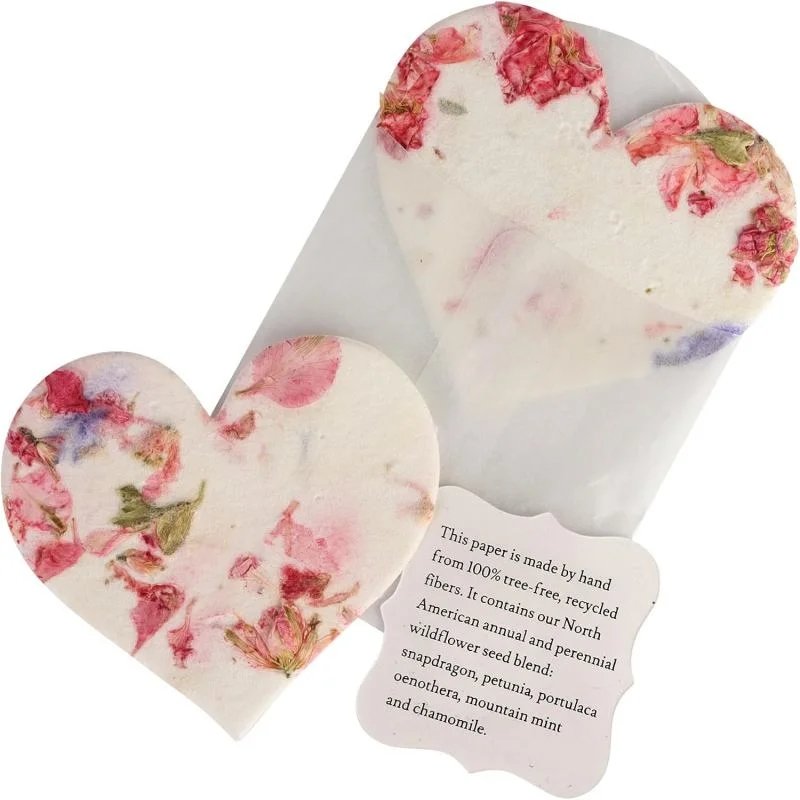
Meta description: Learn how plantable paper cards work, how to plant them, and what to consider when choosing seed paper, printing methods, and card designs.
What Are Plantable Paper Cards?
Plantable paper cards are greeting cards, thank-you notes, invitations, or promotional cards made with paper that contains seeds. Instead of treating the paper as something to discard after use, recipients can follow the planting instructions and give the seeds an opportunity to grow.
These cards can turn an ordinary message into an interactive experience. They are used for birthdays, weddings, thank-you notes, corporate gifts, events, and brand communications.
However, a plantable card is more than a piece of paper with seeds inside. Its performance depends on the seed variety, paper structure, printing and finishing methods, storage conditions, and how the recipient plants it.
Understanding these details helps brands create a better experience from the moment a card is received to the moment it is planted.
How Do Plantable Paper Cards Work?
Seeds are incorporated into the paper during production. When the recipient is ready to plant the card, moisture softens the paper and allows the seeds to come into contact with the soil.
Under suitable conditions, the seeds may germinate and grow.
The exact process depends on the seed species and the manufacturer’s instructions. A common method involves moistening the card, tearing it into smaller pieces, spreading the pieces over soil, covering them lightly, and keeping the soil moist.
Some products have specific requirements, so recipients should follow the planting instructions provided with the card.
The important point is that plantable paper is designed for a second use, but successful growth is not guaranteed. Seed viability, storage, moisture, temperature, sunlight, and the printing process can all influence the outcome.
How to Plant a Seed Paper Card
Although instructions vary, the following steps provide a useful starting point.
- Check the seed and planting instructions
Different seeds have different requirements for temperature, light, soil, and watering. Before planting, identify the seed type and check whether it is suitable for the local climate.
This is particularly important when the card contains a wildflower mix.
- Prepare the paper
Many manufacturers recommend tearing the card into smaller pieces. This helps distribute the paper more evenly and gives more of it direct contact with the soil.
Some instructions also recommend soaking or thoroughly moistening the paper before planting.
Follow the directions for the particular card instead of assuming that every seed paper product should be prepared in exactly the same way.
- Prepare the soil
Use suitable soil in a garden bed or planting pot. Spread the paper pieces evenly across the surface rather than piling them into a thick layer.
- Cover and water
Cover the paper with a light layer of soil according to the seed-specific instructions. Water gently and keep the soil appropriately moist during germination.
Too little moisture can prevent germination, while excessive watering may cause other growing problems.
- Provide suitable growing conditions
Place the planting container in a location with the light and temperature required by the seed variety.
Germination time varies. Some seeds may sprout relatively quickly, while others need longer or require particular conditions.
Patience matters, and the results may differ between batches and growing environments.
Choosing the Right Seeds
Seed selection is one of the most important decisions when designing plantable paper cards.
Consider the recipient’s region
A seed variety that grows well in one climate may struggle in another. Brands serving multiple markets should consider the growing conditions and applicable rules in their target regions.
Some plant species may be invasive, restricted, or unsuitable for particular environments. A wildflower mix should not automatically be assumed to be appropriate everywhere.
Consider the purpose of the card
Different seed choices create different experiences.
Wildflowers: Can suit celebratory cards, events, and nature-themed communications when the mix is appropriate for the destination.
Herbs: May be suitable for kitchen, gardening, or food-related themes.
Other plant varieties: Can work for more specific applications when their growing requirements and distribution restrictions are understood.
The best choice depends on the recipient, the intended experience, and the ability to provide clear planting guidance.
Printing and Design Considerations
Designing a plantable card requires a balance between visual presentation and seed performance.
Keep the message easy to understand
A card should communicate its purpose clearly. If the recipient is expected to plant it, include simple, legible instructions explaining the relevant steps.
A beautiful design is less effective if the recipient does not know what to do with the card afterward.
Choose printing methods carefully
Not every printing process behaves the same way on seed paper. Heat exposure, ink formulation, ink coverage, and other production conditions may affect seed viability.
The effect depends on the specific paper, seed variety, and production process. No single printing method should be assumed to work equally well for every seed paper product.
For a new design, discuss the intended printing process with the manufacturer and test the finished card rather than relying only on the appearance of an unprinted sample.
Think carefully about coatings and finishes
Laminations, heavy coatings, and certain decorative finishes can affect moisture absorption or make planting less practical.
If plantability is central to the product, evaluate whether a proposed finish is necessary. Test the complete printed and finished card, not just the base paper.
Choose the design before finalizing production
Small details such as the card’s shape, printed coverage, folding structure, and placement of the seeds can influence how the finished product performs.
Treat the planting experience as part of the design brief rather than an instruction added at the last minute.
Plantable Paper Cards for Different Applications
Plantable cards can serve several purposes.
Greeting cards: Birthday and seasonal cards can offer a planting activity after the message has been read.
Wedding invitations and event stationery: Plantable formats can connect the event theme with a later gardening experience. Seed selection should reflect the recipients and destination regions.
Corporate thank-you cards: Businesses can use plantable cards to create a memorable follow-up after a meeting, event, or customer interaction.
Brand communications: A plantable card can become part of a product introduction, gift package, or customer appreciation campaign when the planting experience fits the brand and audience.
Promotional campaigns: Seed paper can provide an alternative to conventional promotional paper items, but its suitability depends on design requirements, production methods, distribution, and the recipient’s ability to plant it.
Plantable paper will not suit every application. Where long-term durability, water resistance, or elaborate surface finishes are essential, conventional materials may be more practical.
Common Mistakes to Avoid
Treating every seed paper product the same way
Different seeds and paper formulations may need different planting methods. Generic instructions should not replace product-specific guidance.
Assuming a biodegradable paper will automatically grow
Biodegradability and successful seed germination are different considerations. A paper product can break down without producing healthy seedlings.
Ignoring the printing and finishing process
The base paper may contain viable seeds, but the finished product should still be evaluated after printing and any additional finishing.
Using unsuitable seed varieties
A seed mix should be evaluated for its growing requirements and suitability for its intended destination. More varieties do not necessarily create a better planting experience.
Skipping small-scale testing
Before committing to a large production run, test a small batch of the finished cards using the intended planting instructions. Record the seed varieties, storage conditions, printing process, and observed germination results.
Testing cannot eliminate every environmental variable, but it can reveal problems before a larger launch.
A Buyer Checklist for Plantable Paper Cards
Before selecting a product or developing a custom design, consider these questions:
Which seeds are incorporated into the paper?
Are those seeds suitable for the intended recipients and growing regions?
How should the card be stored before planting?
Which printing methods and finishes will be used?
Have the finished, printed cards been tested for germination?
Are the planting instructions clear and appropriate for the selected seeds?
Can the card design communicate the message while remaining practical to plant?
Are there regional requirements or restrictions relevant to the seed varieties?
These questions help buyers evaluate the complete product rather than focusing on appearance alone.
Final Thoughts
Plantable paper cards offer an opportunity to extend the life of a message beyond the moment it is received. Their success depends on thoughtful seed selection, suitable paper and printing choices, clear planting instructions, and realistic expectations about growing conditions.
For designers and brands, the objective should not simply be to create a card that contains seeds. It should be to create a card that is attractive, practical to plant, and supported by reliable product information.
A well-designed plantable card brings together communication, design, and a meaningful second use. The details behind that experience deserve as much attention as the design itself.
