
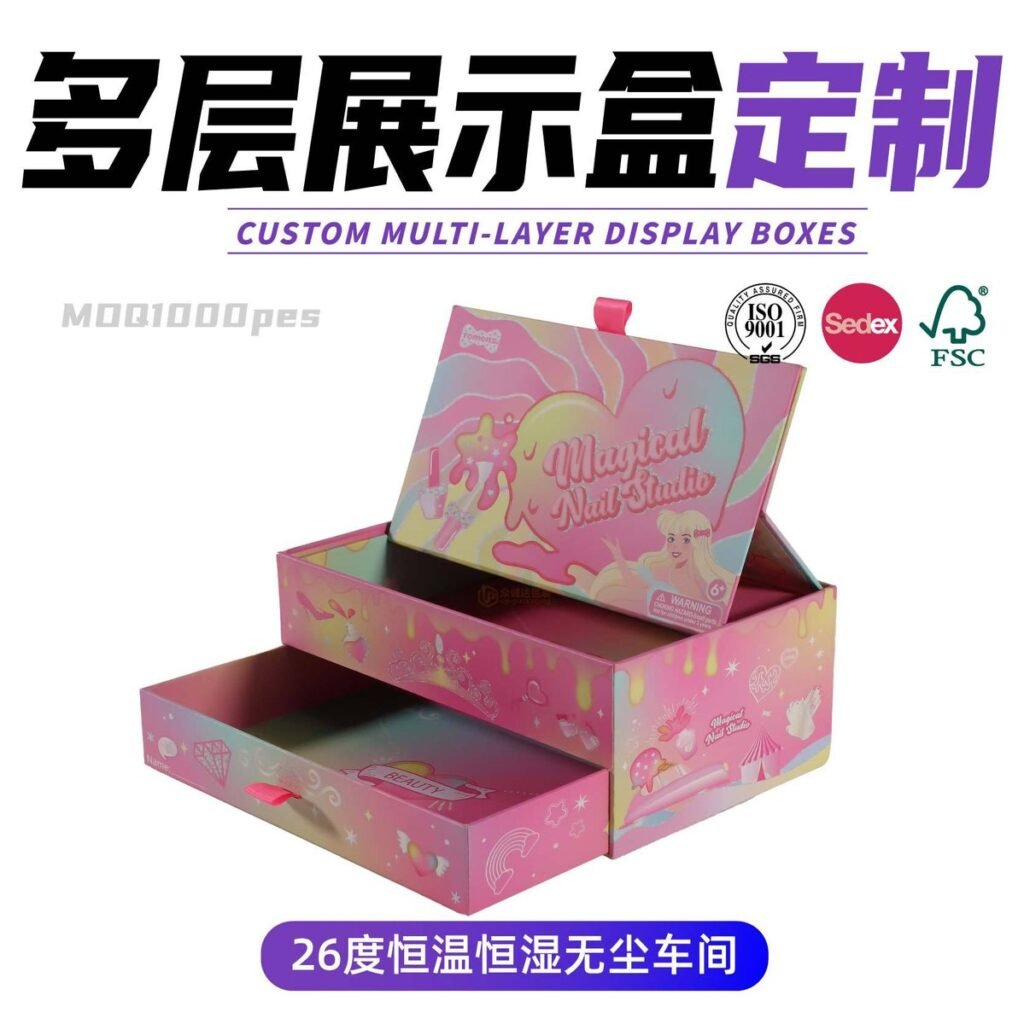
A gift is not only experienced when the recipient sees what is inside. The box, the opening process, the first visual impression, and the way the product is presented all contribute to the overall experience.
That is why custom gift boxes have become an important part of packaging design for many brands.
A well-designed gift box can make the product feel more considered, organized, and memorable. But good packaging is not simply about adding premium materials or decorative finishes. The structure, opening sequence, product protection, graphics, and finishing details all need to work together.
This guide explains the key considerations when designing custom gift boxes and highlights common mistakes that can reduce the quality of the unboxing experience.
What Are Custom Gift Boxes?
Custom gift boxes are packaging boxes designed around a particular product, brand, occasion, or customer experience rather than using a standard stock box.
Customization can involve:
Box structure
Dimensions
Materials
Colors
Printing
Inserts
Closures
Surface finishes
Internal product arrangement
Special shapes or die-cut elements
The goal is not simply to make a box look different.
The packaging should fit the product and create a logical experience from the moment the recipient receives it to the moment the product is fully revealed.
Why the Unboxing Experience Matters
The unboxing experience is a sequence rather than a single moment.
A recipient may first see the outside of the box, then open the lid, remove an insert, discover a message, and finally reach the main product.
Each step creates another opportunity for the packaging to communicate something about the brand.
For example, a well-planned sequence might be:
Outer box → opening mechanism → printed message → insert → product → additional details
This can feel much more intentional than simply placing a product inside a box with empty space around it.
The important question is therefore not only:
Does the box look good?
It is also:
What does the customer experience at each stage of opening it?
Common Custom Gift Box Design Mistakes
- Designing Only the Exterior
One of the most common mistakes is focusing almost entirely on the outside of the box.
The exterior may have attractive graphics, but the inside is left plain or poorly organized.
The inside matters because it is often the part the customer sees immediately after opening the box.
Consider:
Interior printing
Inserts
Product positioning
Messages or cards
Protective elements
The order in which components are revealed
The exterior attracts attention, while the interior completes the experience.
- Adding Too Many Decorative Elements
Foil, embossing, special coatings, metallic effects, ribbons, windows, and other details can all be useful.
But using too many at once can make the packaging visually complicated.
A stronger approach is often to identify one or two elements that deserve attention.
For example:
Clean structure + restrained printing + one distinctive finish
can create a more coherent result than combining every available decorative technique.
- Ignoring the Product’s Actual Dimensions
A beautiful box can still be a poor package if the product does not fit correctly.
Too much empty space can make the product move around during handling. A box that is too tight can make opening difficult or create unnecessary pressure on the product.
Before finalizing the structure, consider:
Product dimensions
Product weight
Number of items
Orientation
Internal spacing
Insert requirements
How the customer will remove the product
Packaging should be designed around the actual product rather than treating the box as an independent object.
- Forgetting the Opening Sequence
A gift box can look impressive in photographs but feel awkward in real use.
For example, the customer may have to remove several unnecessary layers before reaching the product.
Think about the sequence:
What does the customer see first?
What should they discover next?
Where should the main product appear?
Is anything difficult to remove?
These questions can have a significant impact on the perceived quality of the packaging.
- Choosing Materials Before Defining the Experience
Material selection is important, but it should support the intended packaging experience.
Different packaging structures and materials can create very different impressions.
A folding carton may work well for one type of gift set, while a rigid box may be more appropriate for another.
The decision should consider:
Product requirements
Desired appearance
Structural requirements
Opening style
Printing requirements
Internal organization
Packaging budget
Starting with the desired customer experience can make material decisions much easier.
Inserts Can Change the Whole Experience
An insert is not simply a way to keep products in place.
It can also organize the presentation.
Depending on the product, an insert can:
Hold individual items in position
Separate multiple products
Create visual hierarchy
Protect delicate components
Create a more structured presentation
For a gift set containing several products, the insert can determine what the customer notices first.
This is why structural design and graphic design should not always be considered separately.
Printing and Finishing
Custom gift boxes can use a wide range of printing and finishing techniques.
Common options include:
Matte or gloss finishes
Soft-touch finishes
Foil stamping
Embossing
Debossing
Spot UV
Special printing effects
Each technique creates a different visual and tactile effect.
However, the right question is not simply:
Which finish looks most premium?
A better question is:
Which finish supports the brand and the product experience?
A simple box with one carefully selected finish can sometimes communicate more clearly than a box covered with multiple effects.
Think About the Whole Customer Journey
Good packaging design considers what happens before, during, and after unboxing.
Before opening:
How does the box look?
Does it communicate the product category?
Does it create curiosity?
During opening:
Is the opening intuitive?
Does the sequence feel natural?
Are the contents organized?
After opening:
Is the product easy to remove?
Does the packaging still look organized?
Are additional cards or inserts easy to find?
This broader perspective helps prevent packaging from being designed only for photographs.
How to Create a Better Custom Gift Box
A practical design process can follow these steps.
Step 1: Define the Product
Start with the product itself.
Record its dimensions, weight, quantity, fragility, and orientation.
Step 2: Define the Customer Experience
Decide what the recipient should see first, second, and third.
This creates the basic unboxing sequence.
Step 3: Choose the Structure
Select a structure that supports the product and the intended opening experience.
Step 4: Plan the Interior
Decide whether inserts, dividers, cards, or other internal elements are needed.
Step 5: Develop the Visual Design
Apply branding, colors, typography, graphics, and messaging after the structural requirements are clear.
Step 6: Select Finishing Details
Choose finishes that support the overall design instead of adding decoration simply for the sake of decoration.
Step 7: Review the Complete Unboxing Experience
Look at the packaging from the customer’s perspective.
Open it exactly as a customer would.
Check every step.
A Simple Buyer Checklist
When reviewing a custom gift box concept, ask:
Does the box fit the product properly?
Is the opening sequence intuitive?
Is the product easy to remove?
Does the interior look as considered as the exterior?
Are inserts necessary?
Are decorative finishes being used purposefully?
Does the packaging reflect the brand?
Does the design still work when viewed in real life rather than only in photographs?
These questions can reveal problems before production decisions become difficult to change.
Final Thoughts
Custom gift boxes are more than containers.
They are part of the product experience.
A successful design combines structure, materials, graphics, inserts, finishing, and opening sequence into one coherent experience.
The most memorable packaging does not necessarily use the most complicated design. Instead, it gives the customer a clear and satisfying journey from receiving the box to discovering what is inside.
When designing a custom gift box, start with the product and the customer experience. Then build the structure, visual design, and finishing details around those requirements.
The box should not compete with the gift.
It should help reveal it.
