
Flower Seed Paper Business Cards: A Sustainable Way to Make a Lasting Impression
A business card is usually designed to do one simple thing: help someone remember who you are and how to contact you.
But what if the card could do something after the networking conversation was over?
Flower seed paper business cards offer an unusual alternative to conventional paper cards. Made with plantable paper and embedded seeds, these cards are designed to be planted after use, giving the material another purpose beyond the initial exchange.
Instead of immediately becoming another piece of paper in a drawer or recycling bin, a plantable business card can become part of a small growing experience.
That makes seed paper business cards particularly interesting for brands, entrepreneurs, events, and organizations that want their physical materials to communicate a sustainability message.
What Is a Flower Seed Paper Business Card?
A flower seed paper business card is a printed business card made from plantable seed paper containing flower seeds.
The card can be printed with information such as:
- Company name
- Logo
- Person’s name
- Job title
- Contact information
- Brand message
- Social media information
- Short planting instructions
After the networking interaction, the recipient can place the card in soil and provide suitable growing conditions.
The paper is designed to break down while the embedded seeds can germinate.
The exact result depends on factors such as seed viability, planting conditions, temperature, moisture, soil, and the specific seed varieties used.
This is why a plantable card should be understood as more than simply “paper with seeds.”
The material, printing, seed selection, and end-of-life experience all matter.
Why Are Seed Paper Business Cards Interesting for Sustainable Branding?
Digital contact information is now extremely easy to exchange.
QR codes, contact-sharing apps, LinkedIn, email, and digital business cards can all reduce the need for physical cards.
So why would anyone still use a physical business card?
The answer may be experience.
A conventional business card communicates information.
A plantable business card can communicate information and start a conversation.
Imagine meeting someone at a trade show and handing them a card with a simple message:
“Plant me.”
That creates an immediate reason to talk about the material, the seeds, and the idea behind the card.
The card becomes a conversation starter rather than just another contact detail.
How Do Flower Seed Paper Business Cards Work?
The basic concept is simple.
1. Print the business card
The card is produced from plantable seed paper and printed with the required design.
2. Exchange the card
The recipient receives the card during a meeting, event, trade show, or networking conversation.
3. Keep or plant the card
Instead of throwing it away, the recipient can choose to plant it.
4. Place it on soil
The paper is placed on suitable soil and lightly covered.
5. Keep it moist
Regular watering helps create the conditions needed for germination.
6. Wait for growth
Depending on the seed varieties and environmental conditions, germination may take time.
The important point is that the card is designed to have a second stage of life.
What Seeds Can Be Used?
Flower seed paper can contain different types of seeds depending on the intended application.
Wildflower blends are one common approach because they can create a varied visual result when the plants grow.
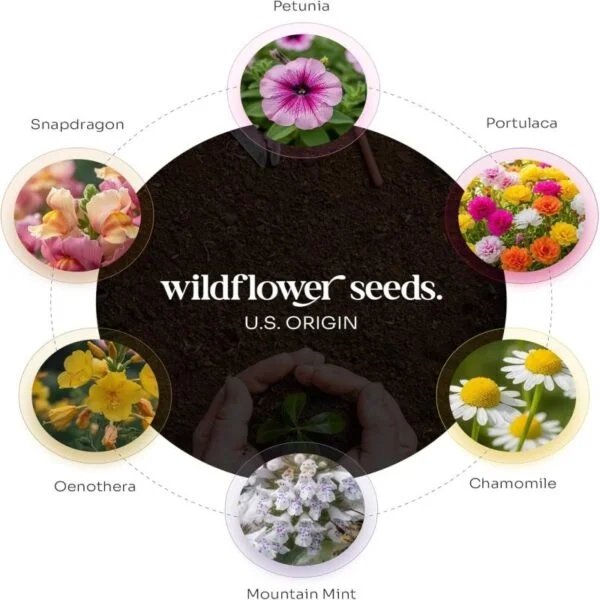
A seed blend may include varieties such as:
- Petunia
- Snapdragon
- Portulaca
- Oenothera
- Chamomile
- Mountain mint
- Beardtongue
However, the right seed mix depends on the target market and intended growing conditions.
For internationally distributed products, buyers should pay particular attention to the suitability of the selected seeds for the destination market and any applicable import or plant-health requirements.
The seed component should therefore be considered during product development rather than added as an afterthought.
Does a Seed Paper Business Card Really Grow?
This is one of the most important questions buyers should ask.
The answer should not simply be based on the phrase “plantable.”
Successful germination depends on several factors, including:
- Seed viability
- Seed variety
- Seed storage
- Soil
- Moisture
- Temperature
- Light
- Planting depth
- Local growing conditions
A responsible product description should therefore avoid implying that every card will produce the same result in every environment.
Instead, buyers should ask about the seed varieties used and the recommended planting conditions.
For a commercial product, information about seed viability and appropriate planting instructions can also help create a more transparent customer experience.
What Makes Good Plantable Business Cards?
A plantable business card still needs to work as a business card.
It should be:
Readable
Important contact information needs to remain easy to find.
Well designed
The sustainability message should complement the brand rather than overwhelm it.
Durable enough for normal handling
The card needs to survive the networking process before it reaches its planting stage.
Suitable for printing
Logos, typography, and important information should reproduce clearly on the selected paper.
Easy to understand
The recipient should know that the card can be planted and what to do with it.
This balance is important.
A sustainable business card that is difficult to read or handle is not necessarily a better business card.
Printing and Design Considerations
Plantable seed paper can be customized in different ways depending on the paper specification and production process.
Possible printing methods can include:
- Digital printing
- Offset printing
- Screen printing
Designers should consider the natural characteristics of the paper when creating artwork.
A plantable paper card does not necessarily need to look rustic.
It can use:
- Minimalist typography
- Brand colors
- Illustrations
- Simple patterns
- Natural tones
- Custom shapes
The goal is to make the sustainability feature feel like part of the brand identity.
Should You Add Coatings or Laminations?
This is an important consideration.
Many conventional premium business cards use glossy coatings, plastic films, or laminations to create a particular visual or tactile effect.
But plantable paper has a different end-of-life purpose.
If the card is intended to be planted, buyers should carefully evaluate whether any coating, film, or finishing process could interfere with the intended planting and biodegradation process.
This does not mean that every printing finish is automatically unsuitable.
It means the complete material specification should be considered.
A useful question for suppliers is:
“Is this printing and finishing specification compatible with the intended plantable end use?”
That question is more useful than simply asking whether a finish looks premium.
Custom Shapes Can Make the Card More Memorable
A standard rectangular business card is familiar.
Plantable paper opens up additional design possibilities through die-cutting.
For example:
- Leaf shapes
- Flower shapes
- Hearts
- Circles
- Custom brand silhouettes
A custom shape can make the card more noticeable during a networking event.
However, unusual shapes should still leave enough space for essential information.
The best design usually balances memorability and usability.
Where Can Flower Seed Paper Business Cards Be Used?
Plantable business cards can be relevant to many situations where sustainability or physical interaction is part of the brand message.
Trade Shows
A distinctive card can help a company stand out after a busy exhibition.
Sustainable Brands
The physical card can reinforce an existing environmental positioning.
Wedding and Event Businesses
Plantable cards can fit naturally with nature-focused events.
Creative Businesses
Designers, studios, photographers, and creative professionals may use unusual card formats to demonstrate creativity.
Promotional Campaigns
A plantable card can become part of a broader brand activation.
Eco-Focused Organizations
The card can provide a physical example of a circular or lower-waste design concept.
Plantable Business Cards vs. Conventional Business Cards
The two formats serve the same basic networking function, but the experience can be very different.
| Feature | Conventional Business Card | Plantable Seed Paper Card |
|---|---|---|
| Contact information | Yes | Yes |
| Physical networking tool | Yes | Yes |
| Plantable | No | Designed for planting |
| Second-life concept | Limited | Yes |
| Conversation starter | Depends on design | Strong potential |
| Material considerations | Conventional paper options | Seed + paper considerations |
| End-of-life planning | Recycling/disposal | Planting and biodegradation |
The plantable version is not necessarily better for every business.
Its value depends on whether the additional experience supports the brand and audience.
Common Mistakes When Designing Seed Paper Business Cards
1. Making sustainability the only design idea
A business card still needs to communicate who you are.
The sustainable feature should support the brand rather than replace good design.
2. Using too much information
A card with excessive text becomes difficult to read.
Focus on the most important contact information.
3. Ignoring the planting experience
If the recipient does not know that the card is plantable, the main feature may be missed.
A short instruction can help.
4. Choosing finishes without considering the end use
Premium coatings may look attractive, but buyers should check whether they are appropriate for a product intended to be planted.
5. Treating every seed as interchangeable
Different seeds have different requirements.
Seed selection should be connected to the intended market and growing conditions.
6. Making absolute environmental claims
Words such as “zero waste,” “completely sustainable,” or “guaranteed to grow” can oversimplify a more complicated product lifecycle.
Specific explanations are generally more useful.
What Should Buyers Ask a Seed Paper Supplier?
Before developing a custom flower seed paper business card, ask:
Material
- What is the paper made from?
- Is it recycled or tree-free?
- What paper weights are available?
Seeds
- Which seed varieties are available?
- Is the seed mix customizable?
- How is seed viability evaluated?
- Are planting instructions available?
Printing
- Which printing methods are suitable?
- What inks are used?
- Are coatings or finishes available?
- Are those finishes appropriate for the intended planting use?
Design
- What sizes are possible?
- Can custom die-cut shapes be produced?
- What colors and artwork specifications are supported?
End of life
- How should the recipient plant the card?
- What growing conditions are recommended?
- What should customers realistically expect after planting?
These questions help buyers evaluate the entire product rather than focusing only on the appearance of the finished card.
The Future of the Business Card May Be More Interactive
Business cards are no longer the only way to exchange contact information.
Digital tools have made networking faster and easier.
But that does not necessarily mean physical cards have no place.
A well-designed physical card can create something digital contact sharing cannot always provide: a tangible memory.
Flower seed paper business cards take that idea one step further.
The card can begin as a networking tool, become a conversation about sustainability, and eventually become something that is planted.
That makes the concept particularly interesting for brands that want their physical materials to communicate more than contact information.
The strongest plantable business card is not simply a card containing seeds.
It is a combination of:
Good design + useful information + suitable material + appropriate seeds + a clear planting experience.
When those elements work together, a business card can have a purpose long after the networking conversation ends.
