
Biodegradable packaging has become an increasingly interesting area of sustainable packaging design. But not all biodegradable materials serve the same purpose.
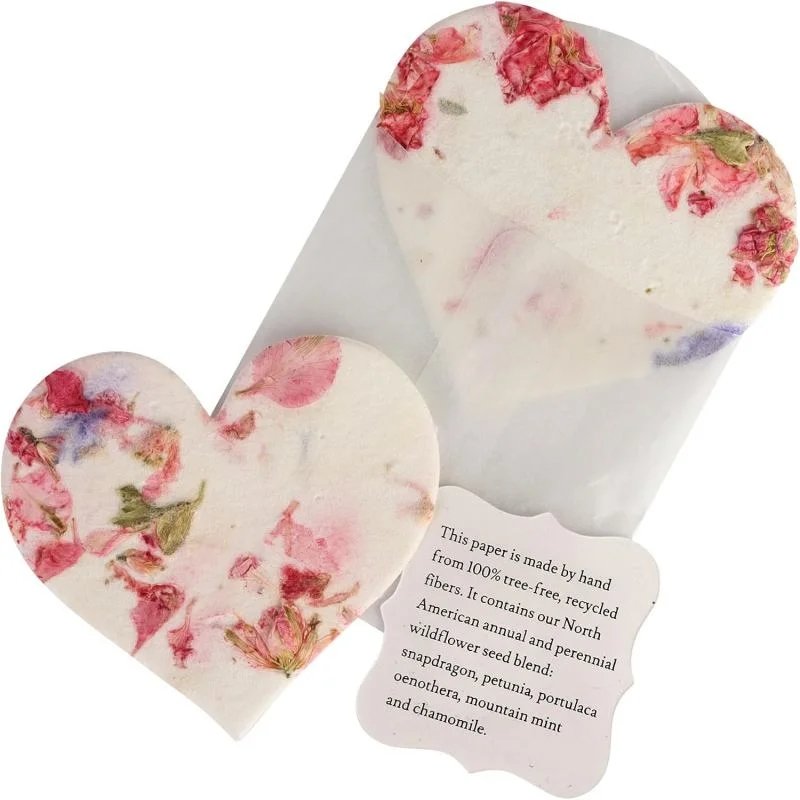
Plantable packaging takes the concept one step further. Instead of simply breaking down after use, certain paper-based packaging products can contain seeds that are intended to germinate when the material is planted under suitable conditions.
This creates a different relationship between packaging and its end of life:
Use → Plant → Biodegrade → Grow
For brands considering plantable packaging, however, the important question is not simply whether the packaging is described as “biodegradable.”
Buyers should also understand the material, seed type, printing, functionality, planting conditions, and the evidence behind sustainability claims.
This guide explains what to look for when evaluating biodegradable plantable packaging in 2026.
What Is Biodegradable Plantable Packaging?
Biodegradable plantable packaging is packaging made from a material designed to break down naturally while incorporating seeds that can potentially germinate after the material is planted.
Plantable seed paper is one of the most recognizable examples.
Instead of treating the paper as something that must simply be discarded or recycled, the material can be designed for a second stage of use.
After the packaging has served its original purpose, the consumer can place it in soil, add water, and provide appropriate growing conditions.
Over time, the paper is intended to break down while the embedded seeds germinate.
The concept is particularly interesting for packaging and paper products that are naturally suited to planting, such as:
- Product tags
- Gift tags
- Greeting cards
- Wedding stationery
- Event invitations
- Place cards
- Promotional inserts
- Eco-friendly confetti
- Small paper packaging components
- Brand inserts and promotional materials
However, plantable packaging should still be evaluated as packaging first.
A sustainable concept is only useful if the material can also perform the function required by the product.
Why Are Brands Interested in Plantable Packaging?
Traditional packaging usually has a relatively simple lifecycle.
A product is purchased, the packaging is opened, and the packaging eventually becomes waste or enters a recycling stream.
Plantable packaging introduces another possibility.
The material can become part of the customer experience rather than simply disappearing after use.
For example, a brand could provide a plantable product tag that encourages the customer to place the tag in soil.
A wedding invitation could contain embedded seeds.
A promotional insert could become a small garden project.
A gift tag could be planted instead of thrown away.
This creates an opportunity to connect packaging design with a physical experience after the original product has been opened.
The key is to make the concept practical rather than treating “plantable” as a marketing label.
1. Start With the Material
The first question buyers should ask is:
What is the material actually made from?
Plantable seed paper can be produced using recycled and tree-free fibers, depending on the manufacturing process and product specification.
A paper-based structure can be particularly interesting for plantable applications because the material itself can be designed to break down under suitable environmental conditions.
But buyers should look beyond broad terms such as:
- Eco-friendly
- Green
- Sustainable
- Biodegradable
- Tree-free
Ask for a clear description of the actual material composition.
You should also understand whether the product contains:
- Plastic films
- Laminations
- Synthetic coatings
- Other components that could affect biodegradation
- Inks or finishes that may be relevant to the intended application
The more complicated the material structure becomes, the more important it is to understand what happens at the end of its useful life.
2. What Seeds Are Embedded in Plantable Paper?
The seeds are one of the most important differences between ordinary recycled paper and plantable seed paper.
A plantable product may contain a mixture of flower, herb, or other seeds depending on the intended application.
For example, a wildflower seed blend can include varieties such as:
- Petunia
- Snapdragon
- Portulaca
- Oenothera
- Chamomile
- Mountain mint
- Beardtongue
The exact seed mix matters because different plants have different growing requirements.
Buyers should therefore ask:
What seeds are included?
And:
Are those seeds appropriate for the market where the product will be used?
This is particularly important for brands selling internationally.
A seed mixture that works well in one climate may not perform in exactly the same way in another.
3. “Plantable” Does Not Automatically Mean “Guaranteed to Grow”
This is an important distinction.
Plantable packaging is designed around the idea that embedded seeds can germinate after planting under appropriate conditions.
But germination depends on more than the existence of seeds.
Factors can include:
- Seed viability
- Seed age and storage
- Soil conditions
- Moisture
- Temperature
- Light
- Planting depth
- Local growing conditions
- The specific characteristics of the seed variety
For this reason, buyers should be careful with absolute claims such as:
“This packaging will always grow flowers.”
A more useful approach is to ask for information about seed viability and recommended planting conditions.
The sustainability story becomes more credible when buyers understand what has actually been tested and what conditions are required.
4. How Does Plantable Seed Paper Work?
The basic planting process is relatively simple.
A typical process can look like this:
Step 1: Place the paper on soil
Lay the plantable paper on prepared soil.
Step 2: Cover it lightly
A thin layer of soil can be placed over the paper.
Step 3: Add water
Keep the material and surrounding soil appropriately moist.
Step 4: Maintain suitable conditions
The seeds need appropriate conditions for germination.
Step 5: Wait for germination
Depending on the seed varieties and growing environment, germination can take time.
The important point is that planting instructions should be clear enough for the final customer to understand what to do.
For consumer-facing products, simple instructions can make the difference between an interesting sustainability concept and an unused piece of packaging.
5. Choosing the Right Shape
One advantage of plantable seed paper is its flexibility in paper design.
Common shapes include:
- Butterflies
- Hearts
- Earth or globe shapes
- Confetti circles
- Custom die-cut shapes
The shape can be connected directly to the brand or event.
For example:
Wedding: hearts, flowers, leaves, custom invitations
Environmental campaign: earth or nature-themed shapes
Promotional campaign: branded tags or custom silhouettes
Events: confetti or small decorative pieces
Custom die-cutting also allows brands to turn the packaging itself into part of the visual identity.
However, the more complicated the shape becomes, the more important it is to consider handling, storage, printing, and packaging requirements.
6. Printing on Plantable Seed Paper
Plantable paper does not have to look like plain handmade paper.
Depending on the material and production method, it can support different printing approaches, including:
- Offset printing
- Digital printing
- Screen printing
Brands can use printing for:
- Logos
- Product information
- Instructions
- Illustrations
- Patterns
- Event details
- Brand messages
However, printing should be considered together with the planting concept.
If the packaging is intended to be planted after use, buyers should understand the printing system, inks, and any coatings involved.
This is another reason not to evaluate sustainability based on one word such as “biodegradable.”
The complete material system matters.
7. Thickness and Paper Weight Matter
Plantable seed paper can be produced in different weights and thicknesses.
For example, specifications may fall within a range such as 120–300 gsm, depending on the intended application.
A lightweight sheet may work well for:
- Small tags
- Inserts
- Cards
- Confetti
- Invitations
A heavier specification may be considered when greater stiffness is required.
But thicker does not automatically mean better.
The right specification depends on:
- Product function
- Printing requirements
- Die-cut shape
- Handling
- Shipping
- Customer experience
- Planting requirements
The goal is to choose enough material for the intended application without unnecessarily increasing material use.
8. Plantable Packaging Should Still Protect the Product
Sustainability should not replace packaging performance.
If the packaging is responsible for protecting a product, buyers still need to consider:
Will it survive normal handling?
Does it have enough stiffness?
Can it hold the product securely?
Will the printed information remain readable?
Will moisture or friction affect the packaging?
For this reason, plantable packaging may be especially suitable for certain paper-based components rather than every type of primary product packaging.
In some applications, a plantable tag or insert may be more practical than trying to make the entire protective package plantable.
The right solution depends on what the packaging is expected to do.
9. Don’t Forget About Moisture and Storage
Paper and seeds have a natural sensitivity to environmental conditions.
This makes storage particularly important for plantable paper.
Buyers should ask about:
- Recommended storage conditions
- Moisture protection
- Packaging during transportation
- Exposure to excessive heat or humidity
- Shelf-life considerations for embedded seeds
This is especially important when products are manufactured in one climate and distributed to another.
The seed component makes plantable packaging different from ordinary printed paper.
10. How Should Buyers Evaluate Sustainability Claims?
This may be the most important part of evaluating plantable packaging.
Instead of asking only:
“Is this biodegradable?”
Ask a series of more specific questions.
Material
What is the material made from?
Biodegradation
What does “biodegradable” mean for this specific product?
Seeds
What seed varieties are embedded?
Viability
Is there information or testing related to seed viability?
Planting
What conditions are required for germination?
Printing
What printing process and inks are used?
Coatings
Are there coatings, films, or laminations?
End of life
What should the customer actually do with the material?
These questions produce a much clearer picture than a single sustainability label.
11. Plantable Packaging and the Customer Experience
One of the strongest characteristics of plantable packaging is that it can turn packaging into an interaction.
Imagine a customer opening a product and finding a small paper tag that says:
“Don’t throw me away. Plant me.”
That message changes the relationship between the customer and the packaging.
Instead of being immediately discarded, the packaging becomes something the customer can interact with.
This can work particularly well for:
- Wedding products
- Eco-conscious brands
- Gifts
- Events
- Promotional campaigns
- Nature-related products
- Sustainable lifestyle products
The packaging becomes part of the story.
But the story needs to be easy to understand.
If customers do not know what to do with the material, the plantable feature may never be used.
12. Common Mistakes When Choosing Plantable Packaging
Mistake 1: Choosing it only because it says “biodegradable”
Biodegradability is only one part of the equation.
Understand the material, seeds, printing, coatings, and end-of-life process.
Mistake 2: Ignoring seed viability
A paper product containing seeds is not necessarily enough.
The condition and viability of the seeds matter.
Mistake 3: Choosing seeds without considering the target market
Growing conditions vary.
Think about where the product will actually be used.
Mistake 4: Making the packaging too complicated
Too many materials, coatings, or components can undermine the simplicity of the concept.
Mistake 5: Forgetting the original packaging function
The package still needs to protect, communicate, and perform its intended job.
Mistake 6: Giving customers no planting instructions
A plantable product should be accompanied by clear guidance when the customer needs it.
Mistake 7: Treating “sustainable” as a complete explanation
A strong sustainability claim should be specific enough for buyers and customers to understand what actually happens to the material.
13. What Should Buyers Ask a Plantable Packaging Supplier?
Before moving forward, buyers can use this checklist:
Material
- What fibers are used?
- Is the material tree-free or recycled?
- Are plastic layers or coatings included?
Seeds
- What seed varieties are used?
- Is the seed mix customizable?
- Is information about seed viability available?
Printing
- Which printing methods are available?
- What inks are used?
- Are additional coatings required?
Design
- What shapes and sizes are possible?
- Can custom die-cutting be used?
- What paper weights are available?
Planting
- How should the product be planted?
- What conditions are recommended?
- What information should be printed for consumers?
Performance
- What packaging function is the material designed to perform?
- How does it handle normal storage and transportation?
Getting clear answers to these questions makes it easier to compare different plantable packaging options.
14. Is Plantable Packaging Right for Every Product?
No.
Plantable packaging is not automatically the right solution for every packaging application.
It makes the most sense when the product’s packaging can reasonably incorporate a paper-based plantable component and when the end customer is likely to understand and use the planting concept.
It may be particularly interesting for:
- Sustainable brands
- Wedding and event products
- Promotional campaigns
- Gift packaging
- Product inserts
- Paper tags
- Greeting cards
- Eco-focused marketing materials
For applications that require high moisture resistance, complex barrier properties, heavy-duty protection, or other specialized packaging performance, a different material system may be more appropriate.
The objective should not be to make every package plantable.
The objective should be to use plantable materials where they genuinely make sense.
Conclusion: Look Beyond “Biodegradable”
Plantable packaging represents an interesting development in sustainable packaging because it changes the question from:
“How do we dispose of this packaging?”
to:
“What could happen after the packaging has been used?”
Plantable seed paper can combine paper, design, seeds, and customer interaction into a single packaging experience.
But buyers should look beyond the marketing language.
A well-designed plantable packaging solution should be evaluated across several dimensions:
