
Meta description: Learn how blank seed paper sheets are made, how to choose the right paper thickness, how to store them, and what to consider when printing and planting seed paper.
What Are Blank Seed Paper Sheets?
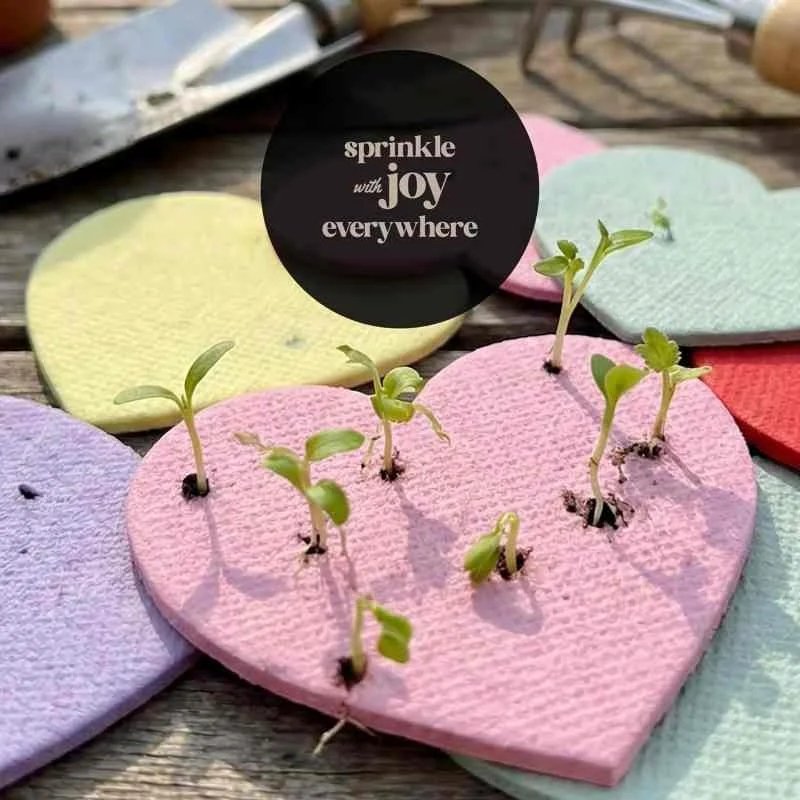
Blank seed paper sheets are sheets of paper containing seeds that can potentially germinate when the paper is planted under suitable conditions. Unlike conventional paper, they are designed to give the material a second purpose after its initial use.
Because they have no pre-printed design, blank seed paper sheets can be used for custom greeting cards, invitations, gift tags, business cards, event stationery, crafts, and other creative projects.
However, not all seed paper sheets are the same. Their appearance, texture, strength, printability, and planting performance can vary depending on the fibers, seed varieties, sheet thickness, manufacturing process, and storage conditions.
Understanding these differences helps designers and buyers choose paper that suits their intended application.
What Are Blank Seed Paper Sheets Made Of?
Seed paper is typically made by incorporating seeds into a paper pulp mixture during production. The pulp is formed into sheets and dried under conditions intended to preserve the seeds.
The exact composition varies by product.
Fiber composition
Different fibers can affect the sheet’s texture, surface, strength, absorbency, and printing behavior.
Some seed papers use recycled fibers, while others may use alternative plant-based fibers or a blend of materials. The term “seed paper” alone does not establish the exact fiber composition.
If you need a particular paper texture, appearance, or printing result, ask for details about the fibers and the manufacturing process.
Seed varieties
Seed selection is another important consideration. Different species have different germination requirements and may respond differently to production, storage, and planting conditions.
A sheet designed for a particular wildflower mix may not be suitable for every climate or application. Consider the intended recipients and local planting requirements when choosing seed varieties.
Texture and appearance
Blank seed paper sheets often have a distinctive handmade appearance, visible seed particles, or an uneven surface.
These characteristics can be part of their appeal, but they may also affect the consistency of printed details. Fine text, small graphics, and highly precise designs should be tested on the actual paper before the final layout is approved.
How to Choose the Right Paper Thickness
Paper thickness and weight influence how a sheet feels and performs. Paper weight is commonly expressed in grams per square meter, or GSM.
A higher GSM does not automatically mean better performance. The right choice depends on the intended use.
For greeting cards and invitations
A sheet needs enough body to feel substantial and remain easy to handle. It should also accommodate the intended design and any folding requirements.
Before finalizing the layout, check how the paper behaves when folded and whether the fold affects the seeds or the sheet’s structure.
For business cards and tags
These applications may require a firmer sheet that can maintain its shape during handling. Seed distribution, surface texture, and print clarity should all be considered alongside paper weight.
For craft and decorative applications
A lighter sheet may be suitable for projects involving tearing, layering, or incorporating paper into other designs.
The best option depends on the intended construction rather than on thickness alone.
Test before selecting a final specification
If a project requires a particular thickness, compare the finished sheets in their intended use. Evaluate handling, tearing, printing, folding, and planting performance rather than relying on GSM as the only selection criterion.
Can You Print on Blank Seed Paper Sheets?
Yes, blank seed paper can be used for custom printing, but the suitable process depends on the paper, seeds, artwork, and intended application.
The fact that a sheet is printable does not automatically mean every printing method will preserve seed viability.
Consider the printing method
Different printing processes expose the paper to different inks, temperatures, pressures, and drying or curing conditions.
Before choosing a method, confirm that it is compatible with the particular seed paper and test the printed result.
Pay attention to ink coverage
Heavy ink coverage can change the surface characteristics of the paper and may affect the planting experience. Complex artwork and large solid areas should be evaluated on the actual sheet.
For designs that need to balance appearance and plantability, consider whether the layout can be simplified or whether some areas can remain unprinted.
Be cautious with coatings and finishes
Laminations and certain heavy coatings may affect moisture absorption and how the paper breaks down during planting.
If the ability to plant the finished product is important, assess any proposed coating or finishing treatment carefully. Do not assume that a visually attractive finish is automatically compatible with the intended use.
Test the complete design
The relevant product is the finished printed sheet, not just the blank paper before production.
Compare printed and unprinted samples under the same storage and planting conditions. Record the seed varieties, process, observation period, and results so that the comparison is meaningful.
A small test is useful for identifying problems, although it cannot guarantee identical performance across every production batch.
How to Store Blank Seed Paper Sheets
Storage matters because seed paper contains living seeds. Poor conditions may reduce seed viability before the paper is used.
Keep the paper dry
Moisture can affect the paper’s structure and may create unfavorable conditions for stored seeds. Protect the sheets from damp environments and accidental water exposure.
Avoid excessive heat and direct sunlight
Heat and light exposure can affect seed viability, depending on the species and duration. Choose storage conditions appropriate for the seeds and follow any product-specific guidance.
Keep the sheets protected
Store the paper in suitable packaging that helps protect it from dust, moisture, and unnecessary handling. Avoid placing heavy objects on sheets if crushing or deformation could affect their intended use.
Follow product-specific storage guidance
There is no single storage rule that applies equally to every seed species and paper formulation. Ask for the recommended storage conditions for the actual product rather than assuming all seed paper has the same shelf life.
If the paper will be stored for an extended period, consider periodic germination checks using representative samples.
How to Plant Seed Paper Sheets
Planting methods vary with the seeds and the specific product instructions. The following steps provide a general starting point, not a universal guarantee of success.
1. Identify the seeds. Check the species and their planting requirements.
2. Prepare the paper. Some products recommend tearing the sheet into smaller pieces or moistening it before planting. Follow the product-specific instructions.
3. Prepare suitable soil. Use an appropriate container or planting area based on the selected seeds.
4. Position the paper. Spread the paper as directed instead of placing many layers in a thick pile.
5. Cover and water. Follow the recommended planting depth and watering instructions for the seeds.
6. Provide suitable growing conditions. Light, temperature, moisture, and soil conditions vary by species.
Germination is not guaranteed. The result depends on seed viability, storage, processing, and growing conditions.
Common Mistakes to Avoid
Choosing paper based on thickness alone
Paper weight is only one part of the decision. Fiber structure, seed distribution, surface texture, and production quality can also affect performance.
Assuming every sheet can be printed the same way
An approach that works with conventional paper may not work equally well with seed paper. Always test the intended printing method and final artwork.
Ignoring storage conditions
Leaving seed paper exposed to humidity, heat, or other unsuitable conditions may affect its performance before the customer ever uses it.
Adding finishes without testing
Coatings and laminations may change how the paper interacts with moisture and soil. Evaluate the complete finished product before making a final decision.
Treating every seed variety alike
Different species have different requirements. Clear identification and appropriate instructions are more useful than generic claims about planting performance.
A Buyer Checklist for Blank Seed Paper Sheets
Before selecting blank seed paper for a project, consider these questions:
- What fibers are used in the paper?
- Which seeds are incorporated into the sheets?
- What thickness and surface characteristics suit the intended application?
- Which printing methods are compatible with the actual paper and seeds?
- Have printed samples been evaluated for germination?
- Are coatings or finishes necessary, and have they been tested?
- What storage conditions are recommended?
- Are the planting instructions appropriate for the intended recipients and region?
These questions help ensure that the paper is evaluated for its complete use, rather than just its appearance.
Final Thoughts
Blank seed paper sheets offer a flexible starting point for creative stationery, personalized cards, invitations, tags, and other plantable paper products.
The best results come from matching the fiber composition, seed varieties, paper thickness, printing process, and storage conditions to the intended application.
For designers and buyers, the priority should be to test the actual product and provide clear planting instructions. Seed paper can create an engaging second use for paper, but its performance depends on the details behind the finished sheet.
